

If you browse popular knitting patterns on Ravelry, you’ve probably noticed that double-stranding (and even triple-stranding!) is still very popular. But just because a pattern calls for multiple strands of yarn held together, does that mean you have to knit it that way?
The answer is no! You can definitely substitute a single strand of yarn instead. But there are a few things to consider before making the switch, especially when it comes to gauge, drape, and the overall feel of your finished project.
First, let’s look at why a designer might choose to multi-strand in the first place.
Why Would a Designer Choose to Multi-Strand?
There are several reasons, but let’s start with one of the most popular combinations: lace-weight mohair held together with another yarn.
Reason #1: Warmth Without Weight
Mohair is very warm but also light and airy. When combined with another yarn such as fingering or sport-weight merino, it can create a fabric with the gauge of a DK, worsted, or even bulky-weight yarn, but without the same heaviness.
Another benefit is that mohair’s fuzzy halo helps fill in the gaps of a loosely knit fabric, allowing you to use larger needles while still maintaining some body.
And you don’t necessarily need to combine mohair with another type of yarn! In my Triple Time sweater, I held three strands of lace-weight mohair together. The result is a bulky-gauge fabric that’s light, drapey, yet still warm.


Reason #2: Added Texture and Color Dimension
Adding mohair to a smoother yarn introduces a soft, fuzzy texture. It can also create beautiful color effects, whether you choose a similar shade for subtle dimension or a contrasting color for a more dramatic look.
For example, below I’ve compared a single strand of worsted-weight yarn with that same yarn held together with lace-weight mohair.

And here are two more examples showing what happens when you choose a completely different mohair color:


Want to learn more about knitting with multiple strands? Check out my Double-Stranding 101 blog post.
What about Multi-Stranding Without Mohair?
Mohair isn’t the only reason designers choose to multi-strand. Holding two strands of a similar-weight yarn together can create a thicker gauge while sometimes producing a lighter, more flexible fabric than a traditional heavier-weight yarn (all depending on fiber of course).
For example, in the first photo below I’ve held two DK-weight yarns together to create a bulky-gauge fabric. And in this second example, I’ve combined two sport-weight cotton yarns to create an aran-gauge fabric. Not only does the fabric feel lighter than many traditional aran-weight cottons, but combining a solid and gradient yarn also creates an interesting color effect.

Can I Substitute a Single Strand Instead?
Yes! Whether you’re trying to reduce the cost of a project, avoid working from multiple balls of yarn, or simply prefer a different fiber, you can often substitute a single strand.
The key is finding a yarn that gives you the correct gauge and creates a fabric you like.
For example, if the original design combines mohair with another yarn, replacing both with a single, heavier-weight yarn may produce a denser fabric with less drape.
To maintain a lighter feel, you might consider a chainette-constructed yarn (learn more about chainette yarns here). Or for added drape, you might explore alpaca or linen blends, keeping in mind that some elasticity is often desirable, especially for garments (so a blend of, say, alpaca and wool or linen and wool).
How Do I Know Which Yarn Weight to Choose?
A great place to start is the pattern’s Ravelry listing, where you can see both the yarn weights being combined and the resulting gauge.
Under the Yarn Weight information, look for the words “Yarn Held Together.” This tells you which yarn weights are combined and the approximate resulting weight.
For example, here’s my Triple Time sweater:

Notice how it says “Lace + Lace + Lace = Bulky”? This means I held three strands of lace-weight yarn together to create a fabric with a gauge similar to bulky-weight yarn.
Now let’s look at another example: my Cloud Illusions cowl, which holds two sport-weight yarns together.

On Ravelry, you’ll see “Sport + Sport = Worsted,” so a single strand of worsted-weight yarn would be a logical starting point.
But the most important information is the pattern’s gauge.
Cloud Illusions has a gauge of 19 stitches = 4″. Although this falls within the typical worsted-weight range, some DK-weight yarns could also work really well at that gauge. And Triple Time has a gauge of 12 stitches = 4″, which falls within typical bulky-weight range, but a slightly lighter aran/chunky may also work at that gauge (keep reading below to see an example of this!).
So rather than focusing exclusively on the yarn-weight label, look for a yarn that can achieve the specified gauge while creating the type of fabric you want.
How Much Yardage Will I Need?
When substituting a single strand for multiple strands, remember that you don’t add together the yardages of the original yarns.
For example, if a pattern calls for two strands held together, with 800 yards of each, you’re knitting with approximately 800 yards of doubled yarn, not 1,600 yards of finished yarn length. So, 800 yards would be a reasonable starting estimate for your single-strand substitute.
However, different yarns can behave differently, even at the same gauge. The amount of yarn you use may vary depending on the fiber, construction, and fabric you create. It’s a good idea to purchase some extra yardage, especially for larger projects like sweaters.
An Example: A Single Stranded Triple Time Sweater
To demonstrate how a multi-stranded design can work with a single strand, I knit a second version of my Triple Time sweater using Berroco Millstone Tweed.


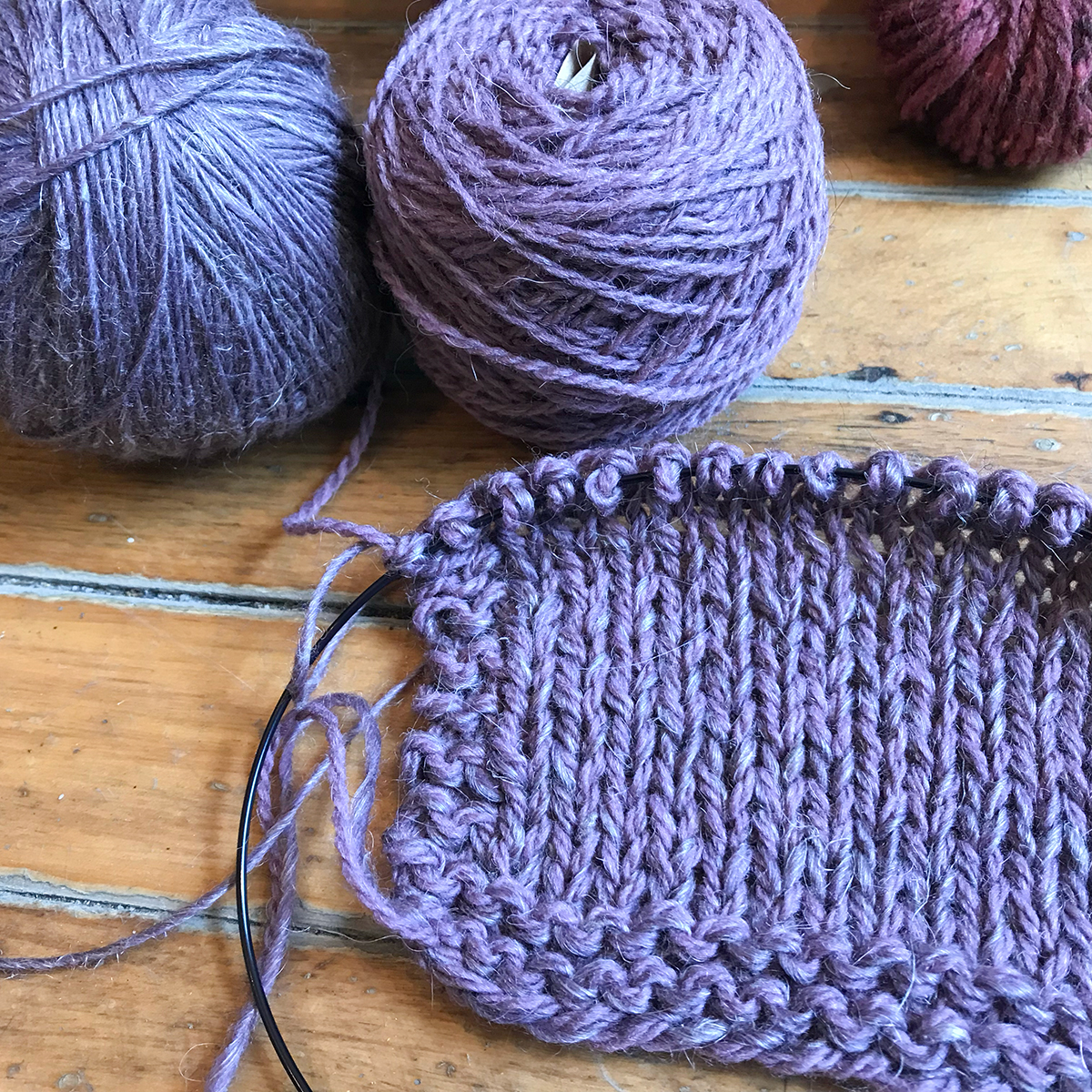
Millstone Tweed is classified as an aran/light-bulky yarn, while Triple Time calls for a gauge of 12 stitches = 4″. That’s looser than Millstone Tweed is typically knit, but after swatching, I loved the resulting fabric!
The looser gauge gives the tweedy yarn plenty of drape. It’s not quite as light and airy as the original mohair version, but it still doesn’t feel heavy.
I also love how different the two sweaters look. It’s a great example of how changing the yarn can completely change a design’s overall look and feel, even when the gauge stays the same.
The Key to a Successful Substitution? Swatching!
If you’re considering a single-strand substitution, always swatch first!
Check that you’re achieving the pattern’s stitch gauge, but don’t stop there. Evaluate the fabric’s drape, weight, elasticity, and overall appearance. Just because a yarn can achieve the required gauge doesn’t mean it’s the right choice for your project. Ultimately, the goal is to find a yarn that works with the pattern while creating a finished piece you’ll love wearing.
I hope this has been helpful! If you have any additional tips or have had any personal experiences with single-stranding a multi-stranding project that you would like to share with me, feel free to reach out – I’d love to hear your perspective!